PHOBOS FORWARD INFRASTRUCTURE
SETTLE—1
Where interplanetary transport
becomes Martian infrastructure.
A human forward base on Phobos—positioned between arrival, orbital operations and the Martian surface.
DESTINATION / PHOBOSREFERENCE CREW / 3–4SURFACE PHASE / 30–90 DACROS / HUMAN CULMINATION
01
WHY PHOBOS
The harbour
of the Martian system.
Phobos is not selected for what can be discovered there. It is selected for what can be operated from there.
Close to Mars, but outside the commitment of atmospheric entry and surface ascent, it can connect interplanetary vehicles with orbiters, landers, robotic fleets and future surface industry.
Not a destination beside Mars.
The gateway into its operating economy.
TRANSFER
- FUNCTION
- Move people, payloads and responsibility between transport layers.
- ASSETS
- Docking interfaces · transfer vehicles · pressurised logistics
- INTERFACE
- HOLLOWAY · Mars landers · orbital vehicles
- PHOBOS BENEFIT
- A handover can occur without committing the interplanetary vehicle to the Martian surface.
SCIENCE CAN USE THE INFRASTRUCTURE. IT IS NOT THE REASON THE INFRASTRUCTURE EXISTS.
MARS SYSTEM INTEGRATION ARCHITECTURE
Phobos is not the end.
It is the handoff.
SETTLE-1 connects interplanetary arrival with the orbital and surface systems that follow. Its operational outputs become the evidence behind every subsequent deployment decision.
HOLLOWAY / CARGO
- INPUTS
- Crew · cargo · vehicles · mission data
- OPERATIONS
- Mars capture · system verification · approach coordination
- OUTPUTS
- Transferred people and assets
- DECISION GATE
- Authorise Phobos rendezvous
ARCHITECTURAL OUTPUTSSHIELDING DESIGNLOGISTICS REDUNDANCYCREW ISOLATIONHUMAN–AUTONOMY INTERFACESISRU + POWER + HABITAT CHAINSSURFACE DESCENT / GO–NO-GO
02
THE PHYSICAL GATEWAY
Infrastructure becomes
a place.
The image is quiet because every system behind it is not.
PHOBOS SURFACE−46.8 °C
EXTERNAL PRESSUREVACUUM
RADIATION DOSE0.031 mSv/h
CABIN PRESSURE101.3 kPa
O₂ PARTIAL21.2 kPa
N₂ PARTIAL79.0 kPa
CABIN TEMPERATURE+21.4 °C
WATER LOOP+18.7 °C
03
THE DESTINATION
A small moon.
An unforgiving platform.
Phobos is close enough to Mars for direct surface teleoperations, yet dynamically and physically unlike any conventional planetary base site.
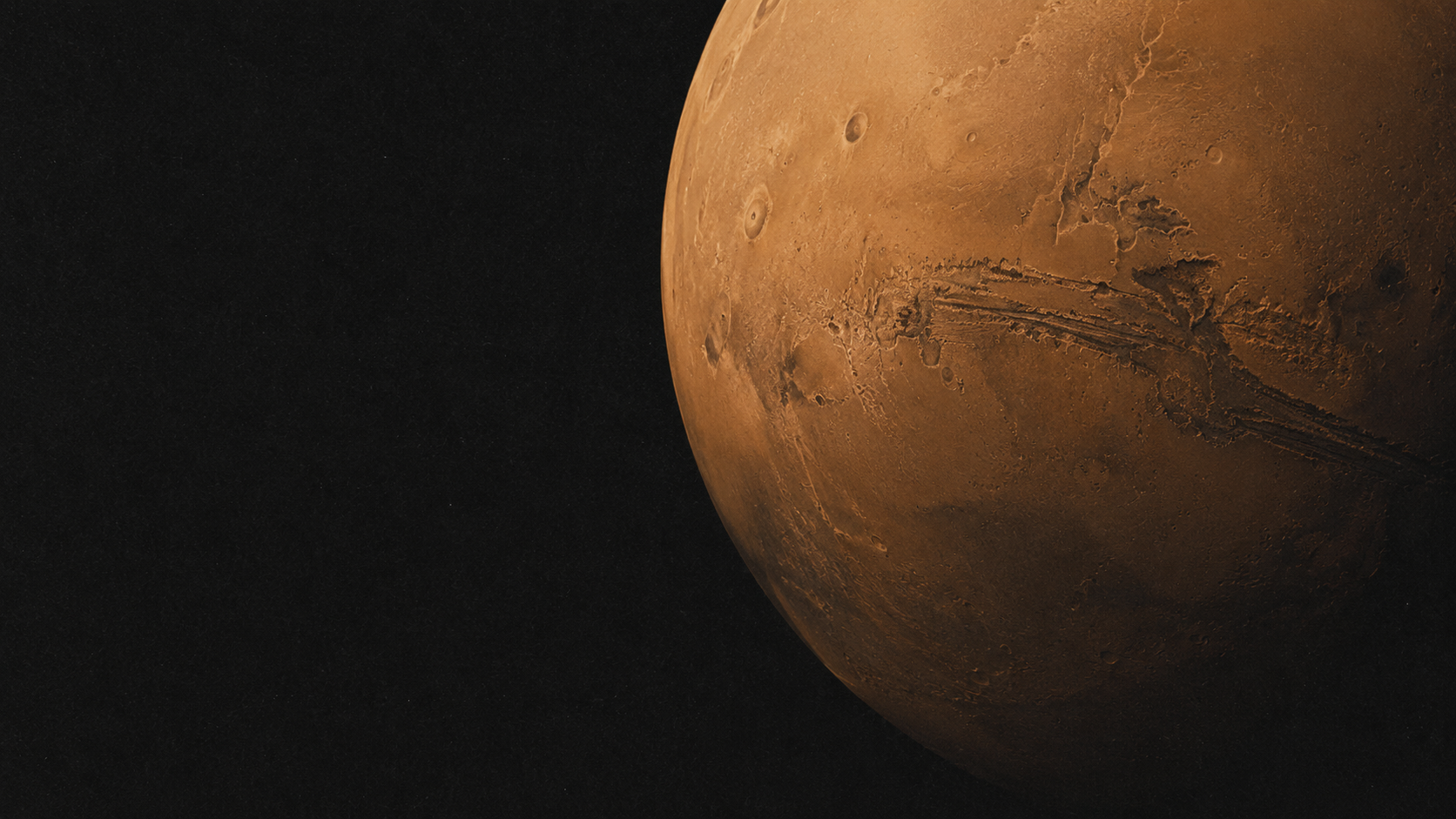
MARS6,000 KM BELOW
PHOBOS
04
THE OPERATING SEQUENCE
Arrival is only
the first dependency.
The crew does not arrive to build from nothing. SETTLE-1 begins with robotic emplacement, verification and a functioning survival baseline.
Cargo, power and communications arrive first.
Robotics prove anchoring, pressure and thermal paths.
The crew enters the Martian system aboard HOLLOWAY.
A Phobos lander matches, contacts and anchors.
Mars teleoperations and base validation begin.
Departure follows human condition and system margin.
05
THE DEFINING INTERFACE
You do not land
on Phobos.
You attach.
Touchdown is not the end of descent. It begins a continuous structural relationship with uncertain regolith, almost absent gravity and every impulse generated by the station itself.
- REFERENCE PRIMARY
- A force-feedback, multi-point anchoring concept seeks verified subsurface engagement.
- REFERENCE SECONDARY
- Compliant braces may control lateral motion and thermal flex.
- CONTINUOUS
- Anchor tension and platform attitude are repeatedly audited.
ANCHOR STATE / CONTINUOUSLY VERIFIED
01 / SYSTEM INTERFACE
The module does not stand. It carries tension.
Replaceable articulated arms transfer every station impulse from reinforced pressure-shell hardpoints into several independent anchors.
STRUCTURAL PATH / MULTI-POINT + REDUNDANT06
ENGINEERING THE CONTACT
A base that cannot
simply stand.
SETTLE-1 is neither a conventional surface base nor a free-flying station. It must establish, maintain and continuously verify a controlled mechanical relationship with Phobos.
Contact
Match the local motion of Phobos and establish contact without rebound, uncontrolled rotation or a separating impulse.
- WHAT THE SYSTEM MUST DO
- Optical navigation, LIDAR surface mapping, low-impulse terminal control and compliant contact probes treat touchdown as a capture event—not as the end of a descent.
- WHAT MUST BE DEMONSTRATED
- Repeated approach-and-contact trials across terrain models, navigation uncertainty and off-nominal thruster performance, with verified capture and retreat paths.
- WHAT REMAINS UNRESOLVED
- The allowable contact envelope depends on local slope, surface compliance, spacecraft inertia and plume interaction that cannot be fully resolved before close-range reconnaissance.
SETTLE-1 does not claim to have solved Phobos.
It defines what must be tested before Phobos can become infrastructure.
07
THE FORWARD BASE
Distributed by function.
Connected by survival.
No monolithic habitat. Each pressure volume carries a defined function, an isolation boundary and a recoverable relationship with the rest of the station.
08
HUMAN BIOLOGY + PSYCHOLOGY
The first system carried
into deep space
is the human body.
Every person is multi-role trained. No passenger. No single irreplaceable operator. But training does not remove biology, grief, fatigue or conflict. SETTLE-1 treats human condition as measurable operating state—not personal weakness.
baseline / maximum
Earth days
months
condition + margin
01 / SYSTEMS + POWER02 / MEDICAL + PSYCHOSOCIAL03 / HABITAT + MAINTENANCE04 / TELEROBOTICS + COMMS
Biological Load
01 / Radiation accumulation02 / Bone + muscle loss03 / Neurovestibular adaptation04 / Immune + metabolic change05 / Circadian disruption06 / Medical autonomy
- WHAT MUST BE MONITORED
- Personal dosimetry, musculoskeletal condition, balance and coordination, sleep continuity, immune markers, nutrition, cardiovascular response and recovery after every operational load.
- WHAT CAN BE MITIGATED
- Shielded duty cycles, resistive loading, controlled nutrition, adaptive light schedules, protected sleep periods and clinical pathways designed for delayed specialist support.
- WHAT REMAINS UNCERTAIN
- The combined effect of interplanetary transit, artificial gravity, a near-zero-gravity surface phase, radiation and individual susceptibility cannot be reproduced as one complete terrestrial analogue.
SETTLE—1 → HOLLOWAY
SETTLE‑1 does more than qualify the base.Continue into the connected architecture ↗
It establishes the biological and psychological evidence required to design the vehicle that must carry its crew home.
09
GRACEFUL DEGRADATION
Failure is not prevented
by pretending it is rare.
SETTLE-1 is designed to contain failure, isolate it, transfer essential functions and recover before one damaged layer becomes a mission loss.
ANCHOR DRIFT
Gravity will not secure the station. Tension, attitude and ground engagement remain continuously monitored.
MULTI-POINT RECOVERYRADIATION EVENT
No atmosphere and no global magnetic field place the crew directly inside the solar and cosmic environment.
SHIELDED CORE / 6–48 HPRESSURE LOSS
Every pressure volume must isolate without taking the common life-support spine with it.
SEAL <30 SCREW DEGRADATION
Illness, sleep collapse and cognitive narrowing are system failures—not private weaknesses.
AUTONOMOUS SAFETY HOLDThe human can fail faster than the structure.
Therefore the structure must know how to protect the human.
10
SETTLE-1 WITHIN ACROS
Not the beginning
of Mars.
The result of everything before it.
THRIEVE exposes weak systems. ACROS connects and qualifies them. PRIME proves permanent surface operations. MAGELLAN develops recurrent cislunar logistics. HOLLOWAY carries the human system between planets.
SETTLE-1 brings those disciplines together where Earth can no longer close the loop.
Follow the ACROS architecture ↗PHOBOS IS NOT A SHORTCUT TO MARS.